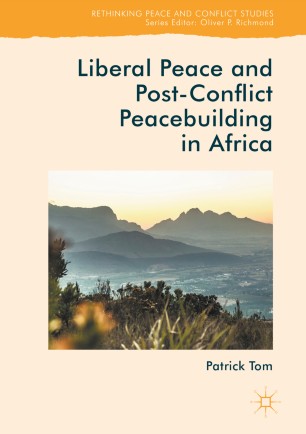
Liberal Peace and Post-Conflict Peacebuilding in Africa
-
 Writen byPatrick Tom
 - PublisherPalgrave Macmillan
- Year2017
Liberal Peace and Post-Conflict Peacebuilding in Africa" critically examines the application of liberal peacebuilding frameworks in post-conflict African contexts, with a particular focus on Sierra Leone. Patrick Tom explores the theoretical and practical dimensions of hybrid forms of peace and 'post-liberal' peace, analyzing how concepts of power, hybridity, and resistance manifest in post-conflict settings. The book delves into the dynamics between international actors and local communities, highlighting the complexities and challenges of implementing liberal peace models in diverse cultural and political landscapes. Through empirical research, Tom provides insights into how local actors navigate, resist, and adapt to externally imposed peacebuilding initiatives, offering a nuanced understanding of the interplay between global norms and local realities. In an era where the effectiveness of traditional liberal peacebuilding approaches is increasingly questioned, this book offers timely insights into alternative models that prioritize local agency and contextual specificity. The critique of one-size-fits-all interventions resonates with current debates on decolonizing international relations and promoting indigenous solutions to conflict resolution. As global policymakers and practitioners seek more sustainable and inclusive peacebuilding strategies, the lessons drawn from Sierra Leone's experience provide valuable guidance for future engagements in similar contexts. Liberal Peace and Post-Conflict Peacebuilding in Africa" is a significant contribution to the discourse on peacebuilding and international intervention. Patrick Tom's thorough analysis challenges conventional paradigms and advocates for a more nuanced approach that respects local dynamics and power structures. The book is well-researched and theoretically robust, making it essential reading for scholars, policymakers, and practitioners involved in post-conflict reconstruction and peace studies. While the focus on Sierra Leone provides deep insights, readers interested in other regions may need to extrapolate the findings to different contexts.