
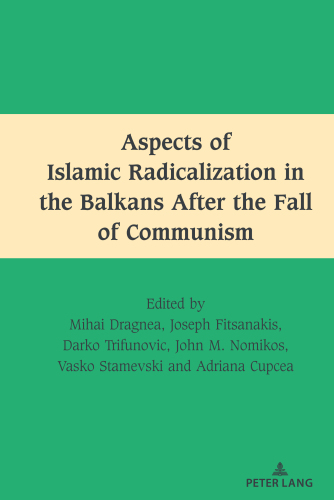
Aspects of Islamic Radicalization in the Balkans After the Fall of Communism
-
 Writen byJohn M. Nomikos, Joseph Fitsanakis, Darko Trifunovic, Adriana Cupcea, Vasko Stamevski
 - PublisherPeter Lang Inc., International Academic Publishers
- Year2023
This volume investigates the emergence and evolution of Islamic radicalization in the Balkans following the fall of communism. Drawing from a multidisciplinary framework, the editors compile case studies and regional analyses that trace how external ideologies—particularly Salafism and Wahhabism—penetrated Balkan Muslim communities. The book challenges assumptions about local drivers of extremism by analyzing transnational religious influence, foreign-funded madrassas, and the ideological recruitment mechanisms used to incite youth radicalization. It contextualizes these developments within the legacy of the Yugoslav Wars and the broader dynamics of global jihadism, including the return of Daesh fighters. Relevance with the Current Era and Community Engagement Mechanism: The rise of radical ideologies in fragile post-communist societies remains a contemporary concern. relevant in understanding the intersection of foreign influence, religion, and identity in transitional societies. Its insights into Kosovo, Bosnia, and Macedonia are vital for shaping counter-radicalization strategies. For community engagement, it underscores the need for reinvigorating moderate religious traditions, youth deradicalization programs, cultural literacy, and state-level resilience through interfaith and educational initiatives. An academically rigorous and timely contribution, this book fills a critical gap in scholarship around Balkan security, religious extremism, and foreign ideological penetration. The use of local data and interdisciplinary approaches strengthens its reliability. It is essential reading for policymakers, scholars, and practitioners working in conflict prevention, religious moderation, and counter-extremism.