
Is the Salafi Manhaj an Indicator of Terrorism, Political Violence and Radicalization?
-
 Writen bySalafiManhaj Research Divis
 - PublisherSalafiManhaj.com
- Year2007
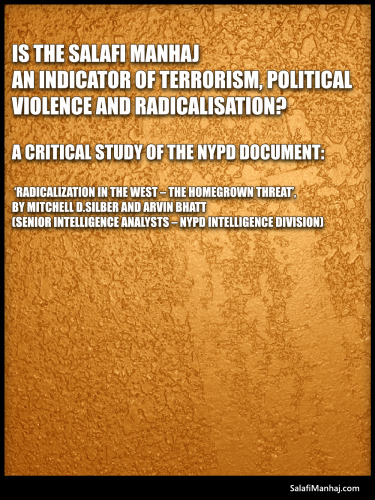
This analytical research paper critically examines the 2007 NYPD report titled Radicalization in the West: The Homegrown Threat, authored by Mitchell D. Silber and Arvin Bhatt. The NYPD report posits that adherence to Salafi Islam is a potential indicator of radicalization leading to terrorism. SalafiManhaj's paper challenges this assertion, arguing that the NYPD's understanding of Salafism is flawed and lacks nuance. The authors contend that Salafism, as practiced by mainstream adherents, emphasizes strict adherence to Islamic teachings and explicitly rejects political violence and terrorism. The paper supports its argument by citing prominent Salafi scholars who have condemned extremist ideologies and by presenting case studies of Salafi communities actively opposing radicalization. The authors assert that mischaracterizing Salafism contributes to unwarranted suspicion and profiling of peaceful Muslim communities. This analytical research paper critically examines the 2007 NYPD report titled Radicalization in the West: The Homegrown Threat, authored by Mitchell D. Silber and Arvin Bhatt. The NYPD report posits that adherence to Salafi Islam is a potential indicator of radicalization leading to terrorism. SalafiManhaj's paper challenges this assertion, arguing that the NYPD's understanding of Salafism is flawed and lacks nuance. The authors contend that Salafism, as practiced by mainstream adherents, emphasizes strict adherence to Islamic teachings and explicitly rejects political violence and terrorism. The paper supports its argument by citing prominent Salafi scholars who have condemned extremist ideologies and by presenting case studies of Salafi communities actively opposing radicalization. The authors assert that mischaracterizing Salafism contributes to unwarranted suspicion and profiling of peaceful Muslim communities. This analytical research paper critically examines the 2007 NYPD report titled Radicalization in the West: The Homegrown Threat, authored by Mitchell D. Silber and Arvin Bhatt. The NYPD report posits that adherence to Salafi Islam is a potential indicator of radicalization leading to terrorism. SalafiManhaj's paper challenges this assertion, arguing that the NYPD's understanding of Salafism is flawed and lacks nuance. The authors contend that Salafism, as practiced by mainstream adherents, emphasizes strict adherence to Islamic teachings and explicitly rejects political violence and terrorism. The paper supports its argument by citing prominent Salafi scholars who have condemned extremist ideologies and by presenting case studies of Salafi communities actively opposing radicalization. The authors assert that mischaracterizing Salafism contributes to unwarranted suspicion and profiling of peaceful Muslim communities.