

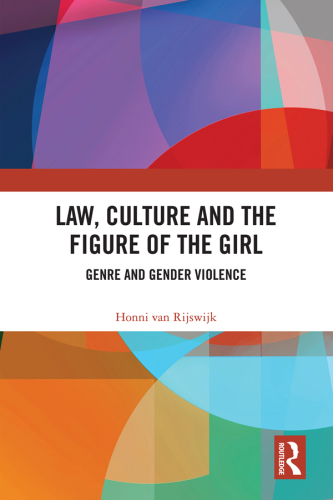
Law, Culture and the Figure of the Girl; Genre and Gender Violence
-
 Writen byHonni van Rijswijk
 - PublisherRoutledge
- Year2025
This book critically examines the figure of ‘the girl’ as a pivotal subject-position and voice in legal critique, particularly concerning gender violence. It challenges the conventional legal frameworks that inadequately address violence against girls, proposing the girl as a key lens to rethink law, jurisdiction, and responsibility. Through interdisciplinary analysis, it draws on cultural texts—including fiction, films, and television—to reveal how these narratives confront and reshape dominant legal and social understandings of violence, trauma, race, and gender. The work aims to contribute to both academic discourse and practical legal reforms regarding gender-based violence. In an era marked by heightened awareness of gender violence and systemic injustice, this book offers timely insights into the intersections of law, culture, and identity. It supports advocacy and educational programs focused on gender rights and legal reform by providing critical perspectives on how culture shapes legal responses to violence. The book’s emphasis on cultural representation can facilitate community dialogues and support survivor-centered approaches to justice. In an era marked by heightened awareness of gender violence and systemic injustice, this book offers timely insights into the intersections of law, culture, and identity. It supports advocacy and educational programs focused on gender rights and legal reform by providing critical perspectives on how culture shapes legal responses to violence. The book’s emphasis on cultural representation can facilitate community dialogues and support survivor-centered approaches to justice. In an era marked by heightened awareness of gender violence and systemic injustice, this book offers timely insights into the intersections of law, culture, and identity. It supports advocacy and educational programs focused on gender rights and legal reform by providing critical perspectives on how culture shapes legal responses to violence. The book’s emphasis on cultural representation can facilitate community dialogues and support survivor-centered approaches to justice.