
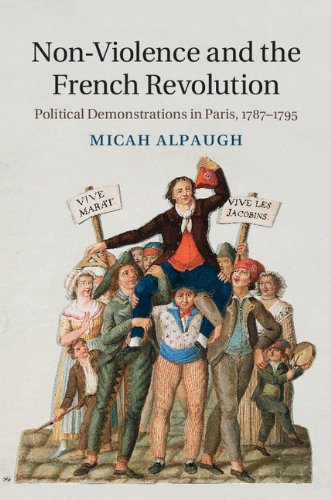
Non-Violence and the French Revolution:
-
 Writen byMicah Alpaugh
 - PublisherCambridge University Press
- Year2014
This book explores the role and dynamics of non-violent political demonstrations during the French Revolution, focusing specifically on Paris between 1787 and 1795. It challenges the conventional narrative of the French Revolution as predominantly violent by emphasizing the importance and impact of peaceful collective action in shaping revolutionary politics. The author analyzes various demonstrations and their organizational strategies, highlighting the interplay between political demands, public expression, and state responses. The book provides a detailed examination of non-violent protest as a form of political engagement during a critical period of social and political upheaval. The study of historical non-violent demonstrations offers valuable lessons for contemporary movements advocating peaceful change amidst political turmoil. Understanding the tactics and influence of peaceful protest during the French Revolution can inform modern strategies for civil resistance and community mobilization in democratic and authoritarian contexts alike. The book encourages community engagement mechanisms focused on dialogue, non-violent protest, and political participation to achieve social justice and democratic reforms. The study of historical non-violent demonstrations offers valuable lessons for contemporary movements advocating peaceful change amidst political turmoil. Understanding the tactics and influence of peaceful protest during the French Revolution can inform modern strategies for civil resistance and community mobilization in democratic and authoritarian contexts alike. The book encourages community engagement mechanisms focused on dialogue, non-violent protest, and political participation to achieve social justice and democratic reforms. The book’s strength is in its meticulous historical research and its challenge to dominant violence-centered narratives of revolution. It offers a nuanced view that values non-violent political action and contributes to interdisciplinary studies of protest and revolution. The absence of detailed page information slightly limits full bibliographic completeness. Compared to other revolution-focused studies, it stands out for its focused attention on peaceful protest and its political efficacy.