

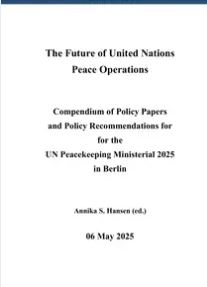
The Future of United Nations Peace Operations:
-
 Writen byAnnika S. Hansen (ed.)
 - PublisherGlobal Alliance for Peace Operations
- Year2025
This compendium brings together a series of policy papers and strategic recommendations prepared for the UN Peacekeeping Ministerial 2025 in Berlin. Edited by Annika S. Hansen, the volume examines the future trajectory of United Nations peace operations in the face of evolving global threats such as violent extremism, transnational terrorism, political instability, and humanitarian crises. It integrates lessons learned from past peacekeeping missions, emphasizes the need for innovative partnerships, and proposes reforms to enhance efficiency, legitimacy, and community-centered peacebuilding. Key themes include strengthening UN mandates, improving rapid deployment, fostering interfaith and intercultural dialogue, addressing radicalization through rehabilitation programs, and ensuring that peace operations remain adaptive to geopolitical shifts and technological transformations.The book is profoundly relevant in today’s era marked by complex security crises, violent extremism, and declining trust in multilateral institutions. Its policy-driven recommendations offer frameworks for strengthening peacekeeping to address contemporary threats such as terrorism, cyber insecurity, and cross-border radicalization. Practically, the compendium can inform policymakers, diplomats, and peace practitioners in designing people-centered approaches that link peacekeeping with local community needs. Community engagement mechanisms suggested include involving civil society, religious leaders, and youth networks in conflict resolution, fostering interfaith harmony, and ensuring that peacekeeping operations contribute not only to stability but also to long-term rehabilitation and resilienceThe Future of United Nations Peace Operations is a significant and timely contribution to the discourse on global security and peacebuilding. By offering actionable policy recommendations for the Berlin Ministerial 2025, it bridges scholarly analysis with diplomatic practice. The volume underscores the need for inclusive, adaptive, and forward-looking UN peace operations, making it an essential resource for governments, practitioners, and researchers alike.


