
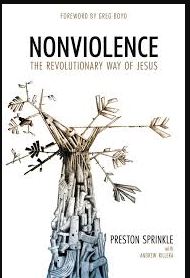
Nonviolence: The Revolutionary Way of Jesus
-
 Writen byPreston M. Sprinkle
 - PublisherDavid C Cook
- Year2021
Preston Sprinkle presents a biblically grounded exploration of Christian nonviolence, examining how the entire biblical narrative engages with violence, war, and peace. Starting with the Old Testament and culminating in the life and teachings of Jesus, Sprinkle argues that Christ embodies a radical, revolutionary nonviolence that Christians are called to emulate. The book directly engages with difficult theological and ethical questions, such as whether violence can ever be justified, how Christians should respond to oppression or war, and what it means to imitate Christ in contemporary society. Written with clarity and urgency, it challenges readers to reconsider traditional views of just war, nationalism, and Christian complicity in violence. Ultimately, Sprinkle makes a prophetic call to the church: to live out nonviolence not as weakness, but as discipleship in action, grounded in faith and Scripture.This book is highly relevant in a world where religion is often manipulated to justify violence. By centering Jesus’ example, Sprinkle provides a faith-driven alternative to extremism, militarism, and intolerance. Community Engagement Mechanisms include: • Church-based study groups on Christian ethics and discipleship. • Interfaith dialogues contrasting Christian, Islamic, Buddhist, and Hindu approaches to nonviolence. • Peace education workshops where Scripture is used as a framework for reconciliation. • University courses in theology, ethics, and sociology examining the intersection of religion and violence. • Public sermons and community outreach fostering nonviolent action inspired by Jesus This book offers a clear, accessible, and biblically faithful perspective on nonviolence, particularly valuable for Christian communities wrestling with issues of war, nationalism, and discipleship. It balances scholarship with practical theology, making it both intellectually rigorous and pastorally useful. Strengths: • Biblically rooted and theologically coherent. • Engages directly with contemporary ethical challenges. • Accessible style that makes it suitable for both academic and church audiences. • Strong call to discipleship, linking theology with lived practice. Weaknesses / Limitations: • Primarily written from a Christian perspective, limiting appeal to secular or interfaith audiences unless contextualized. • More theological than practical in terms of direct conflict resolution strategies. • Relies heavily on biblical exegesis, which may not resonate with non-Christian scholars.